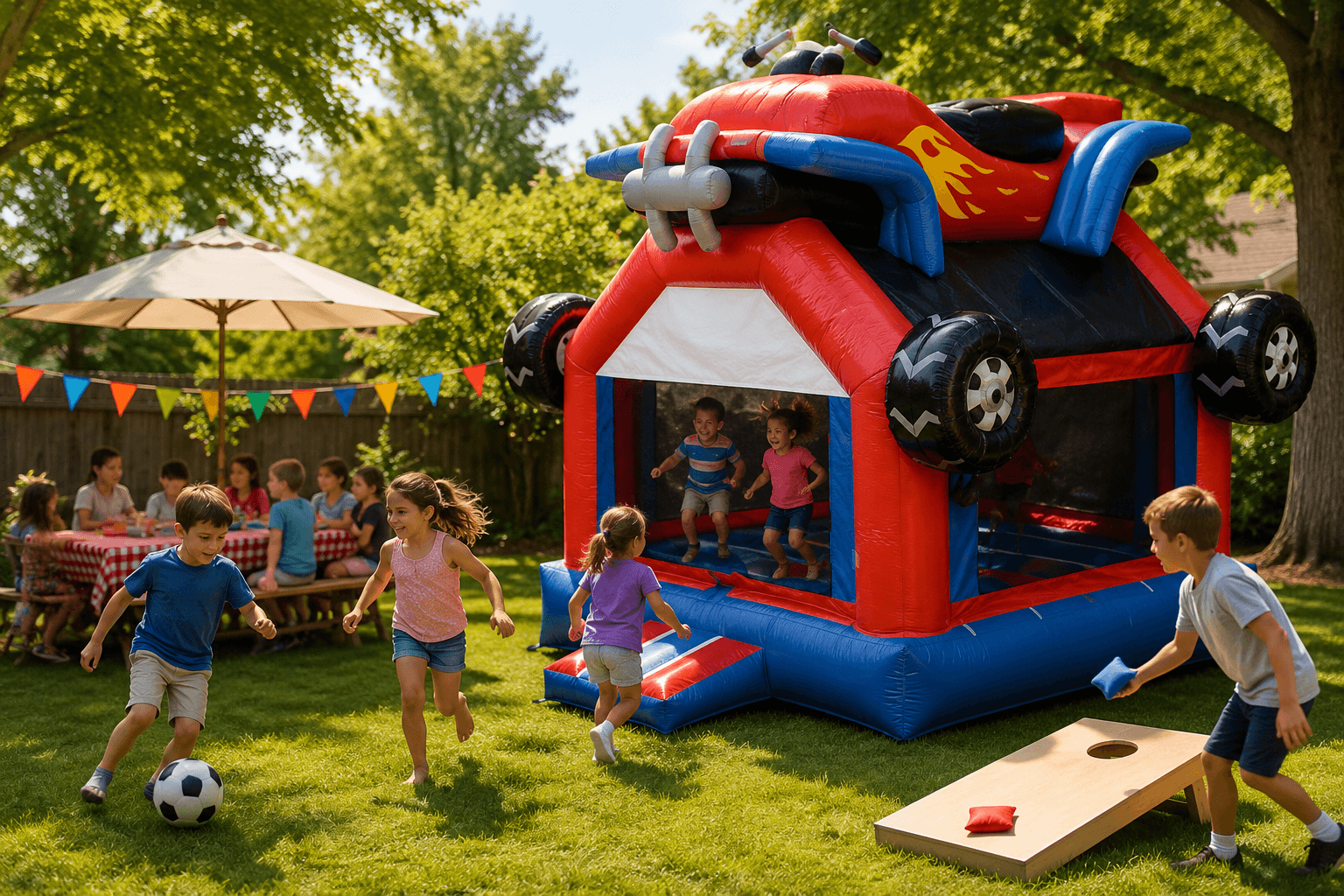
Bounce Houses vs Traditional Backyard Games as Temperatures Rise
As summer temperatures climb, many parents start asking the same question: what's the best way to keep kids entertained outdoors without everyone melting in the heat?
Backyard parties have long relied on classic lawn games like sack races, tug-of-war, and relay races. But in recent years, inflatable attractions have become a popular part of summer celebrations as families look for activities that can keep kids engaged for longer periods of time.
If you're comparing bounce house rentals for summer parties with traditional backyard games, the answer isn't always as simple as choosing one over the other. Each option offers unique benefits depending on the age of the guests, the available space, and the type of experience you're hoping to create.
By the end of this guide, you'll understand how inflatable attractions and traditional lawn games compare, when each works best, and how families often combine both to create memorable summer gatherings.
Why Are Parents Looking Beyond Traditional Backyard Games?
For generations, backyard games have been a staple of family gatherings. They're inexpensive, easy to organize, and encourage friendly competition.
However, modern summer parties often involve larger guest lists, wider age ranges, and longer event schedules. As temperatures rise, keeping children engaged for several hours can become more challenging.
Some common concerns parents face include:
- Kids losing interest after one or two rounds of a game
- Activities requiring constant adult supervision or organization
- Younger children struggling to participate in age-specific games
- Limited entertainment options during longer events
This is one reason many families explore additional summer backyard party ideas that provide continuous engagement without requiring adults to direct every activity.
Bounce Houses vs Lawn Games: How the Experience Differs
Traditional Backyard Games Encourage Structured Play
Classic games usually involve rules, teams, and organized participation.
Examples include:
- Relay races
- Water balloon tosses
- Cornhole
- Tug-of-war
- Three-legged races
- Sack races
These activities encourage teamwork and can be excellent for school events, family reunions, and community gatherings.
However, they often require:
- Someone to explain rules
- Adults to organize participants
- Frequent transitions between activities
For some children, especially younger guests, structured games can lose appeal quickly.
Bounce Houses Encourage Continuous Free Play
Inflatables create a different experience. Rather than following rules or waiting for turns in multiple games, children can engage in active play at their own pace.
Many parents find that bounce houses naturally support:
- Physical activity
- Social interaction
- Imaginative play
- Independent entertainment
This flexibility is one reason bounce houses remain a popular choice for kids summer party rentals during the warmer months.
Those interested in learning more about how inflatable attractions fit into event planning can explore this detailed guide to bounce house rentals.
Which Option Keeps Kids Entertained Longer in Hot Weather?
One of the biggest challenges of summer events is maintaining attention spans as the day progresses.
Lawn Games Often Work Best in Short Bursts
Backyard games can be exciting at the beginning of a party when energy levels are high. But after several rounds, participation sometimes declines, particularly among younger children.
Factors that can affect engagement include:
- Heat fatigue
- Repetitive game formats
- Waiting for turns
- Skill differences among age groups
Inflatable Activities Create Ongoing Engagement
Because inflatable attractions allow children to move freely and interact continuously, they often provide longer periods of sustained activity.
Children can:
- Bounce with friends
- Create their own games
- Rotate naturally without formal organization
- Return throughout the event
This self-directed style of play is especially valuable during longer outdoor family party ideas where entertainment needs to last several hours.
What Age Groups Benefit Most From Each Option?
Not every activity works equally well for every age group.
Traditional Games Often Appeal to Older Children
School-age children and pre-teens frequently enjoy competitive activities because they understand rules and enjoy challenges.
Games like:
- Relay races
- Obstacle courses
- Kickball
- Capture the flag
can work well for this age range.
Bounce Houses Typically Appeal Across Multiple Ages
One reason inflatable attractions remain popular is their broad appeal.
Younger children often enjoy:
- Jumping
- Climbing
- Exploring
Older children may enjoy:
- Racing friends
- Creating challenges
- Socializing while remaining active
For mixed-age gatherings, inflatable attractions can provide a shared activity that accommodates a wider range of developmental stages.
Families researching different inflatable options can browse additional resources within the bounce house category to better understand the variety available.
How Do Space and Setup Requirements Compare?
Another common consideration is the amount of space available.
Backyard Games Offer Flexibility
Traditional lawn games can be spread throughout a yard and adjusted based on available room.
Benefits include:
- Minimal equipment
- Easy customization
- Flexible layouts
However, hosting multiple games often requires several separate activity stations.
Inflatables Create a Central Activity Zone
Backyard inflatable rentals typically create one primary gathering area where children naturally congregate.
This can simplify event layouts by concentrating activity in a designated space.
Rather than managing multiple game stations, many parents appreciate having one focal point for active play.
Those looking to understand different inflatable types can explore available examples within the bounce house category.
How Event Professionals Think About Summer Entertainment
Experienced event planners rarely view inflatable attractions and traditional games as competing options.
Instead, they often think about balancing different types of engagement.
A common approach is to combine:
- Active free play
- Organized group activities
- Quiet social spaces
- Food and rest areas
This allows children to move naturally between experiences throughout the event.
Rather than asking whether bounce houses or lawn games are better, professionals often focus on how different activities complement one another based on guest ages, event duration, and available space.
Frequently Asked Questions
Are bounce houses safer than traditional backyard games?
Both can be safe when used appropriately. Safety depends on factors such as supervision, proper setup, following manufacturer guidelines, and ensuring activities match the ages of participating children.
What are the best summer backyard party ideas for large groups?
Many families combine inflatable attractions, lawn games, water activities, and shaded gathering areas to accommodate different interests and age groups.
Do older kids still enjoy bounce houses?
Many older children enjoy inflatable attractions, especially larger units that include climbing features, obstacle elements, or interactive challenges.
What backyard games work best in hot weather?
Water balloon games, sponge relays, sprinkler activities, and shaded lawn games often perform well during warmer temperatures.
How much space do backyard inflatable rentals usually require?
Space requirements vary depending on the inflatable type and size. Most setups require a flat, open area with additional clearance around the unit.
Can you combine lawn games and inflatable attractions at the same event?
Yes. Many successful summer parties use both. Lawn games provide structured activities, while inflatables offer ongoing entertainment between organized events.
Conclusion
As temperatures rise, families have more options than ever for creating engaging outdoor celebrations.
Traditional backyard games continue to offer timeless fun, teamwork, and friendly competition. Meanwhile, bounce house rentals for summer parties provide continuous active play that can keep children entertained throughout longer events.
Rather than choosing one over the other, many families discover that a thoughtful combination of both creates the most balanced experience. Understanding how each option supports different ages, energy levels, and event goals can help make planning simpler and more enjoyable.
If you'd like to explore this topic further, our related guides go deeper into different types of inflatable attractions, party planning considerations, and outdoor event ideas.